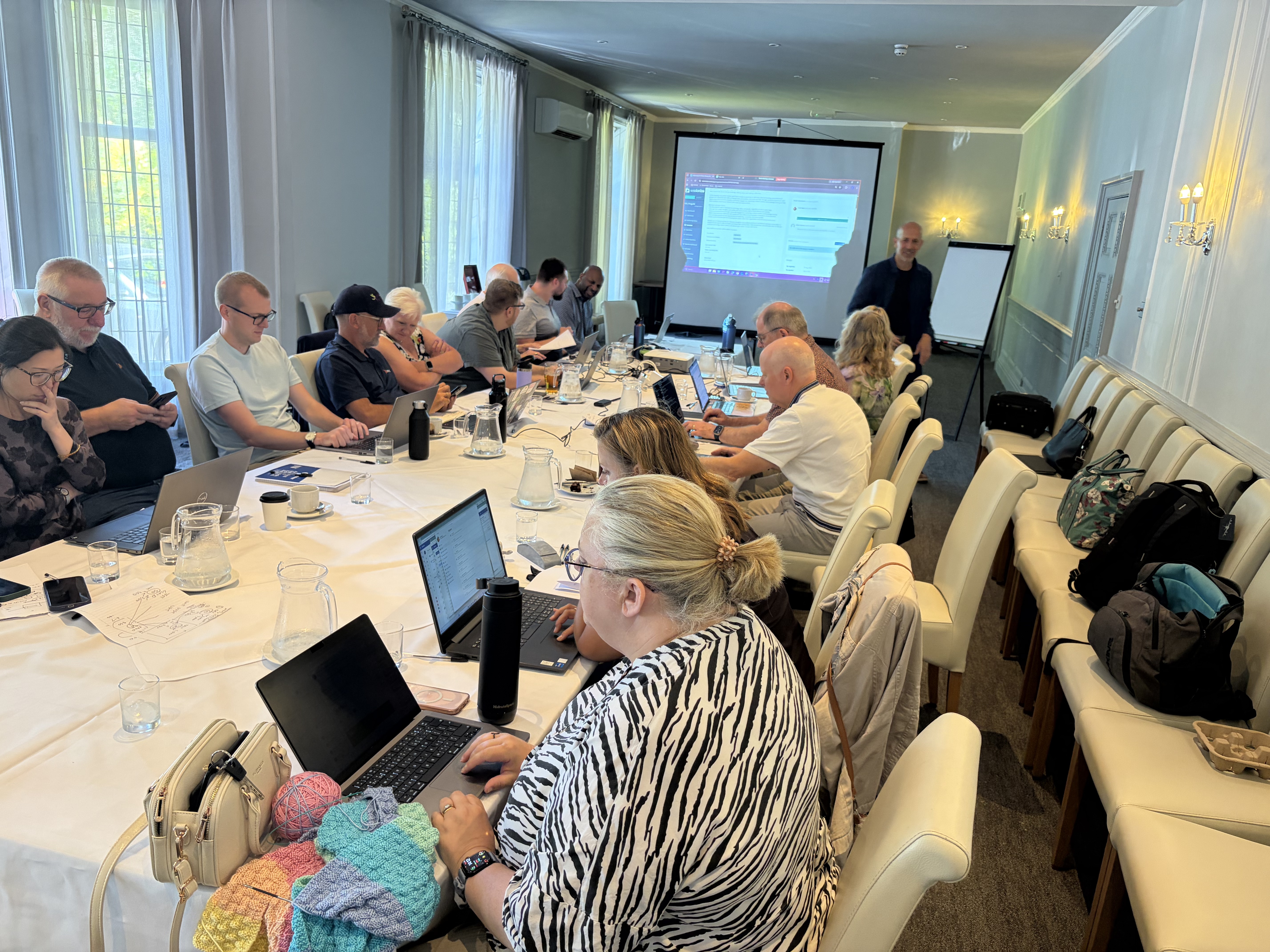
What happens when you get a group of people together to organise a conference? Well, it turns out it’s mostly a mix of Diet Coke, pastries, and long table with keyboard tapping being heard faintly in the background.
The GS UK conference committee got together this week to organise the conference for their flagship event in November 2026. I’ve been part of the committee since 2023, and it’s been a blast. The conference is unlike anything else – a group of highly diverse individuals that are passionate about all things IT – observability, security like ACF2 and RACF, operating systems like TPF and z/OS, databases from DB2 to Adabas, and AI covering MCP, agents, and LLMs. The platform is growing rapidly, and the conference is having to adapt at a rapid rate to accomodate.
When I joined, the process for submitting papers was to email each individual track with your submissions, meaning it felt like an underground network of submissions with a small subset of people submitting that knew. After a couple of years of testing the waters, we have finally moved to Sessionize, a way to view all the conference submissions in the same place – the same is used for conferences such as the Linux Foundation. Bringing change to an organisation that has been working in a particular way for many years has been difficult – we have been through education sessions, video walkthroughs, and emails to make sure that we were all rowing in the right direction.
There was something oddly satisfying about seeing all the submissions in one place. For years, conference planning had felt a little bit like everyone disappearing into separate rooms, emerging months later with a finished agenda and hoping it all fitted together. Suddenly we could see everything. The good ideas, the accidental duplication, the emerging themes, and occasionally two track chairs realising they had both accepted almost exactly the same session. It turns out visibility is a wonderful thing, even if it occasionally means discovering you’ve all had the same idea at the same time.
This year, we decided to get together as a group and go through the agenda together – going through each stream and discussing the agenda as a whole, looking at the clashes, and working as a whole event to ensure that we are doing the same thing together. What I found particularly interesting, was that as a group, we have slowly exposed how each stream thinks about how their stream is being put together. Looking around the room, it struck me that everyone had arrived with the best intentions for their own area. Nobody was deliberately creating clashes between sessions or gaps in the agenda. Yet when you put twenty passionate people together, each optimising for their own audience, somebody has to step back and optimise for the whole conference.
A stream chair cares about the depth and technical credibility, but the attendee cares about a coherent experience, enough variety, and breadth covering beginners through to experts.
There is a hidden depth to conference organisation. On the surface it’s about ensuring that the lunch is served, keynote sessions are delivered, the slide content, there are no hiccups with the sessions. Below the surface, it’s balancing the agenda across all tracks and days, difficult decisions between one speaker and another, and a trade off between streams. Like many organisational changes, the tooling change from email to Sessionize wasn’t about the technology, it was about helping people understand why we were changing, and how to bring them along for the journey. This took significantly longer than first anticipated.
The day was brilliant, and I felt like we were more like a team than I’ve ever seen. As I drove home, I found myself talking to Joe, less about the tooling and more about the people. A conference agenda is ultimately just a reflection of the community behind it. The technology helps, the process helps, but neither replaces a room full of people who care deeply about creating something worthwhile. Looking around the room, listening to debates about session clashes, audience levels, and emerging topics, I was reminded why I’ve stayed involved. The best conferences aren’t built by software or committees. They’re built by communities willing to spend a day eating pastries, drinking Diet Coke, and arguing passionately about what their peers need to learn next.
I’ll look forward to the conference in November!
Leave a Reply