product manager, degree apprentice graduate, open source advocate, bookworm, flautist, heavy-metal fan | views are my own

Category: Events

  • Organising the Agenda

    Organising the Agenda

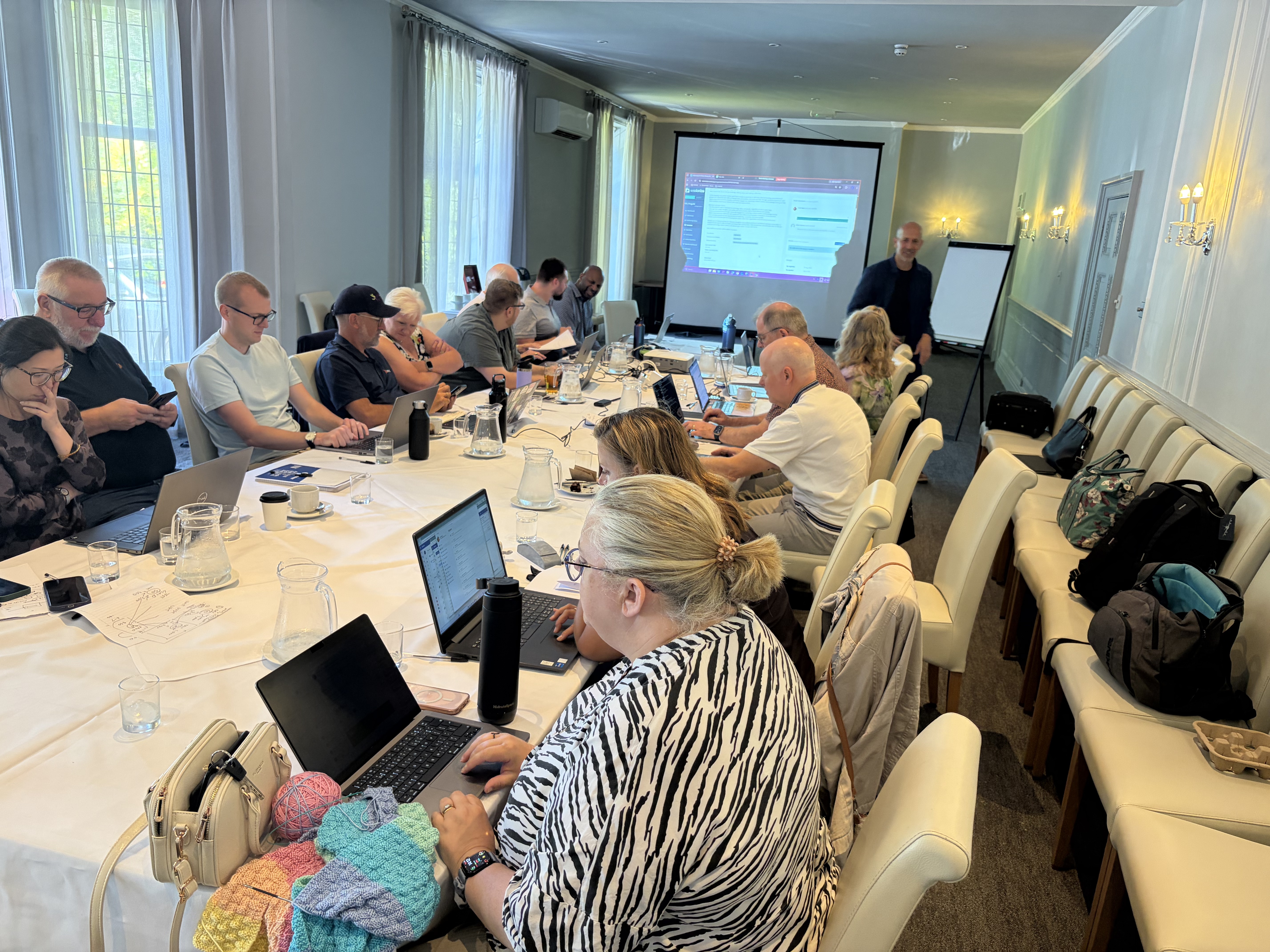
    What happens when you get a group of people together to organise a conference? Well, it turns out it’s mostly a mix of Diet Coke, pastries, and long table with keyboard tapping being heard faintly in the background.

    The GS UK conference committee got together this week to organise the conference for their flagship event in November 2026. I’ve been part of the committee since 2023, and it’s been a blast. The conference is unlike anything else – a group of highly diverse individuals that are passionate about all things IT – observability, security like ACF2 and RACF, operating systems like TPF and z/OS, databases from DB2 to Adabas, and AI covering MCP, agents, and LLMs. The platform is growing rapidly, and the conference is having to adapt at a rapid rate to accomodate.

    When I joined, the process for submitting papers was to email each individual track with your submissions, meaning it felt like an underground network of submissions with a small subset of people submitting that knew. After a couple of years of testing the waters, we have finally moved to Sessionize, a way to view all the conference submissions in the same place – the same is used for conferences such as the Linux Foundation. Bringing change to an organisation that has been working in a particular way for many years has been difficult – we have been through education sessions, video walkthroughs, and emails to make sure that we were all rowing in the right direction.

    There was something oddly satisfying about seeing all the submissions in one place. For years, conference planning had felt a little bit like everyone disappearing into separate rooms, emerging months later with a finished agenda and hoping it all fitted together. Suddenly we could see everything. The good ideas, the accidental duplication, the emerging themes, and occasionally two track chairs realising they had both accepted almost exactly the same session. It turns out visibility is a wonderful thing, even if it occasionally means discovering you’ve all had the same idea at the same time.

    This year, we decided to get together as a group and go through the agenda together – going through each stream and discussing the agenda as a whole, looking at the clashes, and working as a whole event to ensure that we are doing the same thing together. What I found particularly interesting, was that as a group, we have slowly exposed how each stream thinks about how their stream is being put together. Looking around the room, it struck me that everyone had arrived with the best intentions for their own area. Nobody was deliberately creating clashes between sessions or gaps in the agenda. Yet when you put twenty passionate people together, each optimising for their own audience, somebody has to step back and optimise for the whole conference.

    A stream chair cares about the depth and technical credibility, but the attendee cares about a coherent experience, enough variety, and breadth covering beginners through to experts.

    There is a hidden depth to conference organisation. On the surface it’s about ensuring that the lunch is served, keynote sessions are delivered, the slide content, there are no hiccups with the sessions. Below the surface, it’s balancing the agenda across all tracks and days, difficult decisions between one speaker and another, and a trade off between streams. Like many organisational changes, the tooling change from email to Sessionize wasn’t about the technology, it was about helping people understand why we were changing, and how to bring them along for the journey. This took significantly longer than first anticipated.

    The day was brilliant, and I felt like we were more like a team than I’ve ever seen. As I drove home, I found myself talking to Joe, less about the tooling and more about the people. A conference agenda is ultimately just a reflection of the community behind it. The technology helps, the process helps, but neither replaces a room full of people who care deeply about creating something worthwhile. Looking around the room, listening to debates about session clashes, audience levels, and emerging topics, I was reminded why I’ve stayed involved. The best conferences aren’t built by software or committees. They’re built by communities willing to spend a day eating pastries, drinking Diet Coke, and arguing passionately about what their peers need to learn next.

    I’ll look forward to the conference in November!

  • Women in Tech Hampshire, July 2026

    Women in Tech Hampshire, July 2026

    Yesterday, I went to the Women in Tech Hampshire summer BBQ, hosted just outside Southampton at a local business park. I had watched the team at Spectrum IT deliver the event multiple times on LinkedIn, but hadn’t had the courage to go along, even though I’m outgoing and love being around new people, something about branching out of my usual comfort zone of big tech scared me. My way to get around the anxiety of going to the event was to tell people at work that I was going, almost as a commitment to myself that I was going to put myself out there with a new group of people.

    The event is hosted every other month, and features a panel of women that talk about a particular subject – in the past they’ve had topics like female founded companies and neurodiverse leadership. This time, it was about general female leadership in tech. I turned up, not sure what to expect, and immediately found another woman on her own so we started talking and gradually we both felt a lot more comfortable. We invited a few more people to sit with us as they were also on their own and we had formed a group of five within the first fifteen minutes.

    I’ve spoken on podcasts before about community being a particularly important part of belonging as humans, and that in my experience as a flautist, the community is great because you can turn up, know nothing else about the person but their love of the flute or love of music. I had the same feeling at this event. Once we’d got our food we found a table, and immediately started finding common ground in our use of AI, and our opinions of using LLMs to help us with our day to day work, the ways into work that didn’t involve a degree, and the sorts of technology that we all worked on. We had something in common which immediately made everyone feel like they belonged.

    Once we’d eaten, we were ushered into the conference room with over 50 women crowded around tables and perched on tables around the edges. The panel included three leaders – Andrea, Anita, and Tiffany. The questions were fascinating, ranging from whether they had any female mentors as they progressed through their careers, how they found being the only female in a boardroom, and their advice for women contemplating leadership. I particularly found it interesting when a member of the audience asked what to do when as a technical developer, she was told that she needed to move into management to progress – the answer was to negotiate with her work or leave the job and find somewhere that celebrated you as an individual contributor.

    Often, I find that female-led tech panels are cringe, or they regurgitate the same advice. However, in this panel I felt a level of comfort between the panellists and the audience. We didn’t pretend that a woman could have it all, there had to be sacrifice, the panellists acknowledged how privileged they were to be in the position of authority that they held, and the discussion about handling family and the demands of a career were interesting. I felt a level of candidness from the women that I hadn’t seen before.

    As a product manager, part of my role is to lead without authority. Bring teams together to achieve something they didn’t think possible, deliver a business case for a new product to gain approval, negotiate and deliver across the business with teams that don’t work together. I was intrigued that, given all three panellists were in people leadership roles, the discussion naturally gravitated towards management responsibility.

    It made me realise that I’d come to see leadership differently. Most of my career has been spent in roles where I haven’t needed formal authority to get things done. As a product manager, I’ve had to learn how to influence people, bring teams together, and create momentum without ever being their manager. Having panels like this in big tech are few and far between, and so hearing their experience gave me pause for thought about what I could aspire to, rather than be afraid of.

    I’ll definitely be coming back, what a warm, lovely, diverse, and welcoming community of women (and the odd man). I felt like I could have something in common with anyone there, and I really appreciate having my eyes opened to businesses outside of my usual comfort zone. It’s important to be reminded that smaller companies operate outside of big tech.

    I spent the drive there worrying about whether I’d fit in outside of my usual world of big tech, and within fifteen minutes I was sat with four strangers talking about AI and career journeys as though we’d known each other for ages. Communities often feel intimidating from the outside, but once you’re in the room, most people are just looking for someone to sit with.

  • GSE UK 2023

    In November, I spent time at the GSE UK conference in Whittlebury Hall, near Silverstone in the UK. It was my second conference, so I was full of anticipation and unsure what I was going into. My first thought was – how on earth am I going to navigate the mammoth agenda with an exceptional amount of content, and the second – are there going to be people I know?

    I spent time before the conference going through the agenda and selecting one or two sessions for each slot to make sure that I had a few things lined up to go to. On the Monday, they had put on a half-day set of sessions that were particularly interesting, I went to a session on Cyber Resiliency specifically looking at how customers can use a Cyber Vault to be particularly resilient against potential cyber-attacks. The vendor area with stands wasn’t open until the following day, so I wanted to make sure that I had acclimatised. Many friends from the previous conference (IBM TechXchange) were there, including Steven, Emma, Joe, Tony, Shari. When I saw them socialising in the bar, it really helped me find my feet in terms of understanding how to navigate the conference and using the new app they had started using.


    As I had settled, the next three days were far more entertaining. I spent time wandering around the stand with a Lego Mainframe, the Plexi (which is a see-through Mainframe), the formula one race car that sat out the front, the InterSkill stand, and really just absorbing the atmosphere that came with GSE UK. I went to some sessions around an introduction to CICS – this was highlighting the next features in the latest release 6.1, this also signposted the rest of the sessions at the conference which Tony highlighted particularly well. Michelle did a fantastic session about Macro 4’s use of Galasa and it was brilliant to see her advertise the way that they had taken many of their old tests and converted them to Galasa tests. Additionally, Broadcom did a great pitch about DevOps on the Mainframe, and how to modernise from the perspective of making changes to systems. One session was around OpenTelemetry too, it was brilliant to see the way that open-source and parity of technology across the distributed and on premise platforms were merging and they were becoming far more synonymous with each other. There’s a lot of work to be done in this area, but it’s growing in excitement due to the amount of information that is flowing between disparate systems struggling to talk to each other.

    A particularly proud moment was seeing Jade Carino give her talk on Galasa (How to Test the Mainframe Without Knowing the Mainframe). It was the first time that she’d given the talk to an audience, and it was brilliant to see her move around the room, give her demos smoothly and even if something went wrong, she was able to pick herself back up and figure out how to move on. She had a room full of interested users and hopefully we have one or two that went home to see if they could try it. It was a brilliant moment to see her present and I’m really proud of how far she’s come.

     Thank you to GSE for a brilliant event, and I’m excited to be part of the virtual event in April 2024.

  • Open Mainframe Summit – TechXchange 2023

    The Open Mainframe Summit, held on the 11th September, was an excellent showcase of the breadth and depth of the people, community, and technology that is key to the future of the Mainframe platform. The morning sessions included keynotes on topics such as mentorship, a welcoming note from John Mertic and Jason Gartner, Zowe, and the diverse community the Mainframe draws together. Plus, the excitement around announcing Galasa formally had started the day well – with a whole bunch of new stickers to hand out.

    The particular highlight for me, was hosting the diversity panel alongside Donna Hudi, Len Santalucia, and Sudharsana Srinivasan. I started meeting with people from the Open Mainframe Project earlier in the year, and over the last 9 months, I’ve felt nothing but warmth, kindness, and a sense of common language between those that are part of the OMP community. Therefore, the panel was designed to bring out the highlights of working around the Mainframe, such as the ability to walk up to a stranger and discuss VSAM datasets, CICS or SMF transactions and the attitudes towards how enabling different thinkers gives the ability for innovation and alternative solutions. This was really highlighted by Sudharsana, when she spoke about her experience developing advocacy programs within Mainframe. On the other hand, Donna gave a great response to focus on the narratives we write when meeting someone or approaching a new situation. She explained that those narratives can immediately put barriers causing us to feel defensive and unsure when meeting new people. However, if we notice the stories being written then we’re able to give ourselves the chance to rewrite that and form a different opinion. This was highlighted with Len, when he spoke about people judging him for not acting in the same way as his peers. His family history meant he was an ally for women in the workplace when that wasn’t commonplace. Personally, the most significant thing is that I felt like the anxiety and worry I had around hosting a panel in front of strangers went away when I was able to speak about my first year in Mainframe. I had several people come up to me afterwards to show me their support and that the OMP was the kind of place that brought a whole range of people together that all just wanted to create great software.  

    As my first conference, the experience was overwhelming with all the people and excitement – with the afternoon packed full of 20-minute sessions covering all the OMP themes such as modernisation, development experience, automated testing, and education. I was surrounded by a mix of people, from customers, users, contributors, and business sponsors that wanted to learn more. From the two rooms, I learnt more about Zowe, and as Tim Willging walked through the lessons learnt from the past five years, and what’s next for the project. I absolutely loved speaking about Galasa, the new integrated automated test project within the OMP. The audience was small, but well formed, with questions and follow-on conversation which meant it was worth the effort. People floated throughout the two rooms and because the sessions were shorter, the ability to learn and absorb more was seen by everyone. Although afterwards, I did feel exhausted.

    The Summit was a great experience to meet those I’d heard about online or met virtually. It felt like I’d been part of the community for years, people were so welcoming, and I really could walk up to them and talk about anything. I’m excited to be part of the OMP and continue to build the relationships with people that I’ve met and hope to continue to support those that feel like outsiders. We can all feel like we don’t fit in, but the community built already makes you feel like you’re immediately part of the club.

  • IBM Foundation Think Together in 2016

    What will the future be like for my kids if the most basic processes become automated? What is the impact if Artificial Intelligence can predict everything that we do? How could the world improve with a greater awareness of what the artificial brain can do?

    Those were the kind of questions that IBM Foundation Think Together (FTT) created, and I honestly couldn’t stop thinking about it for the next few days. The event was a celebration of Graduate and Apprentices from across the UK to come together and collaborate, which was something that only happens once a year. The event was packed – imagine walking through the front door of a massive room and being hit by a tight crowd all stood in their groups talking, you vaguely recognise some faces but others you have absolutely no idea. That was how FTT felt, but as you watch the speakers and move around the different electives you choose, the more comfortable you felt with lots of recognisable faces.

    Personally, the event was overwhelming and inspiring at the same time – hearing from the likes of Master Inventors, Sportsmen and Baronesses throws a lot at you in a short space of time. I felt great, getting to spend a day with friends that I haven’t seen since I started, coupled with one of my favourite topics it was a wonderful set up – and FTT definitely followed through with what it promised.

    One of my favourite parts of the day was listening to Baroness Susan Greenfield, her topic was the human versus the artificial brain and whether the artificial brain actually has the capability to overtake the human brain. It was definitely technical (in biology terms), discussing connectivity between lab rats and a rat that has been running around outside; or the discussion between book and video game characters. There are a lot of take-away points from this talk, and my most prevalent was the discussion between how a human brain can connect objects or music to specific people, whereby the Cognitive and artificial brain will struggle to make the most simple of human connections. Imagine listening to the song from the first date with that special person, or the first dance at your wedding, it creates a very real connection between the song and that particular moment – and that’s something an artificial brain will never experience because it’s those moments in life that make it all worthwhile.

    Another thing that cemented my interest in the Internet of Things (IoT) was a talk by Master Inventor Andy Stanford Clark. I have always had an interest in the amount of data that is gathered about me – whether that is what I’m buying at the supermarket or where I’m going with the introduction of Smart Motorways. Andy brought it all together in a package and it seemed to finally click that IoT integrates my interest in Analytics, with my broader knowledge of how that data is collated. A particular take-away from this was the project he had around fridge/freezers, he collated data for a whole village on how often their fridges were on and off – until FTT I had no idea how significant that was. Andy was a really interesting character too, and being able to work on short projects that he owned rather than a small cog in a large machine seemed to suit him down to the ground.

    One more thing that interested me was a talk by James Cracknell whom is a sportsman and adventurer, pushed himself right to the edge of his limits and got hit by a lorry cycling in America. The head injury changed his life, but what was lovely about the presentation was that he focused on his achievements rather than the injury. Having such an inspirational speaker like James makes a big difference to the day, because it brings everything back down to earth, and it reminds you how fortunate you are to be in a good position in life. Plus, it discusses as an overall arch to the day, with the crowd being reminded that the human brain is a lot more fragile and susceptible to injury in comparison to a computer.

    Overall, the day was great – it ended in a gala dinner whereby I got to meet new IBMers I hadn’t met before. The day wasn’t what I was expecting, it was well organised and done in a way that it suited everyone, not just the people that were looking forward to the evening dinner. Upon reflection I think the app was great, but there could have been a map so that we could see where the electives were – as I did embarrass myself in one of the electives by asking the man hosting (Rupert Colchester) who he was and what his role was (the talk was on his role and how he has been since being a Graduate). He surprised me and actually taught me one or two things that I wasn’t expecting, and I didn’t cause too much damage! However overall I’d definitely recommend it to anyone else who is thinking of going from IBM, even if it is just once.